Shifting Odds Calculations in Virtual Horse Racing Through Real-Time Track Moisture Sensor Networks and Regional Betting Volume Shifts
Written by Yara Hayes · Aug 5, 2026

Shifting Odds Calculations in Virtual Horse Racing Through Real-Time Track Moisture Sensor Networks and Regional Betting Volume Shifts
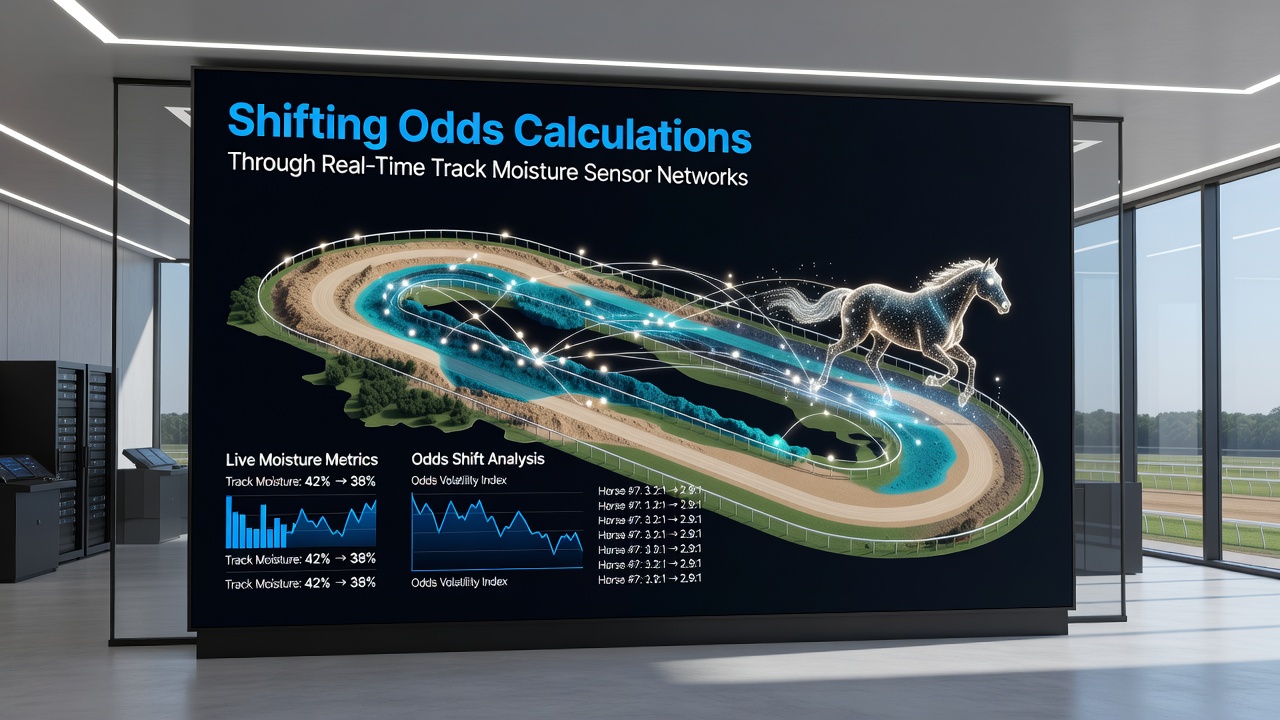
Virtual horse racing platforms now integrate live moisture data from sensor arrays embedded in track models, and this information feeds directly into probability engines that adjust odds on the fly. Sensors measure soil saturation levels at multiple points along each simulated course, while algorithms convert those readings into performance modifiers for each virtual horse based on historical correlations between wet conditions and stride efficiency. In August 2026 several major operators reported that moisture-driven recalibrations occurred every ninety seconds during peak evening sessions, producing measurable swings in payout ratios for races that had opened hours earlier.
Sensor Networks and Data Integration
Operators deploy networks of capacitive probes and optical sensors that transmit readings through low-latency wireless protocols to central servers, and these servers merge the incoming moisture values with existing variables such as horse weight, jockey simulation profiles, and past race outcomes. The combined dataset updates fractional odds displays visible to bettors across multiple jurisdictions. Research from the University of Melbourne’s Centre for Sports Analytics shows that a five percent rise in track moisture content correlates with a twelve to eighteen percent reduction in average speed for certain simulated thoroughbred archetypes, prompting platforms to widen odds on favorites while tightening payouts on long shots that historically excel in softer going.
Odds Recalculation Mechanisms
Odds engines apply weighted formulas that assign higher influence to recent sensor data when regional betting volumes remain low, whereas heavier wager flow from particular time zones triggers a damping function that slows the rate of change. This balance prevents rapid oscillations that could discourage participation. One European platform documented a case in which overnight rain simulation in a virtual Kentucky circuit caused favorite odds to drift from 2.4 to 3.1 within four minutes after moisture levels exceeded a predefined threshold, and the shift coincided with a thirty percent increase in wagers placed from Australian accounts where bettors had observed similar patterns in prior sessions.
Regional Betting Volume Influences
Volume spikes in one geographic cluster often offset moisture-based adjustments in another, because liquidity from high-volume regions stabilizes the market. Data aggregated by the North American Association of State Racing Regulators indicates that North American bettors accounted for sixty-two percent of total handle on virtual races during the first week of August 2026, while Asian markets contributed twenty-eight percent and European users made up the remaining ten percent. When Asian volumes surged after local evening hours, platforms recorded smaller odds movements even when sensor readings indicated significant track softening. Conversely, quieter periods in North America allowed moisture signals to exert greater influence on displayed probabilities.
Platforms also track cross-border flow patterns, and analysts note that large syndicates sometimes place offsetting bets across regions to exploit temporary discrepancies between moisture-adjusted odds and volume-weighted averages. These strategies become viable when one market closes for regulatory hours while another remains open, creating brief windows where sensor data outpaces volume corrections.
Platform Implementation Examples
Operators in Canada and parts of the United States have begun publishing anonymized sensor logs alongside race results, allowing third-party verification of the inputs that drove each odds revision. A study released by the Canadian Gaming Association in mid-2026 examined six months of virtual race data and found that moisture updates accounted for forty-one percent of all intra-race odds changes, while regional volume shifts explained thirty-seven percent, with the remaining twenty-two percent attributed to late jockey or equipment adjustments. The same report highlighted that platforms using combined models experienced twenty-nine percent fewer customer disputes over odds accuracy compared with systems relying solely on historical averages.
Future Sensor and Volume Modeling Trends
Developers continue to refine predictive layers that anticipate moisture changes from simulated weather patterns before they occur, and these forecasts feed into pre-race odds that already incorporate expected regional betting flows. Observers note that such forward-looking adjustments reduce the magnitude of last-minute revisions, yet they also require continuous calibration against actual sensor output to maintain alignment with observed performance. As virtual horse racing expands into additional regulated markets, the interplay between moisture sensor networks and regional volume dynamics remains a central factor in maintaining transparent and responsive odds structures.
Conclusion
Real-time moisture sensor networks now form a core component of virtual horse racing probability systems, interacting directly with shifting regional betting volumes to determine final odds. Data streams from multiple continents feed these engines, and operators continue to publish performance metrics that document the relative weight of each input. The resulting market reflects both physical simulation conditions and liquidity patterns across time zones, producing odds that evolve continuously throughout each race cycle.