Regional Variations in Payment Processing Speeds and Their Ties to User Retention Rates at Digital Poker Platforms Worldwide
Written by Olivia Koch · Aug 17, 2026
Regional Variations in Payment Processing Speeds and Their Ties to User Retention Rates at Digital Poker Platforms Worldwide
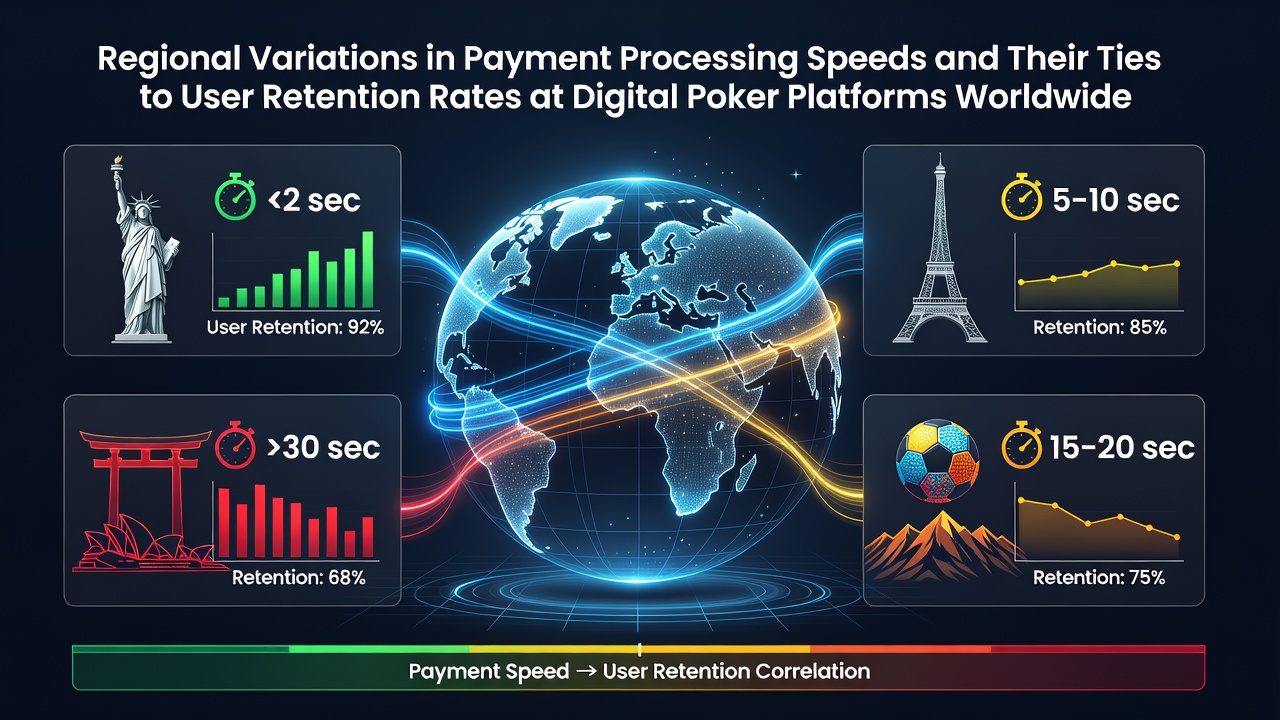
Digital poker platforms operate in markets where payment processing speeds differ sharply by region, and those differences align closely with patterns in how long players remain active on the sites. Platforms in North America often require 24 to 48 hours for bank transfers to clear while many European operators complete the same transactions in under two hours when users select local instant options. Data collected through 2025 and into August 2026 shows that these time gaps correlate with retention curves that diverge by as much as 20 percentage points between the fastest and slowest regions.
North American Processing Timelines and Retention Figures
Operators serving the United States and Canada rely heavily on ACH transfers and credit card rails that still move through legacy banking networks. Average approval windows sit between one and three business days for withdrawals, and platform logs indicate that players who encounter these waits reduce their session frequency by roughly 30 percent within the first 90 days. Canadian provincial data released in mid-2026 tracks a retention rate of 64 percent at the six-month mark for sites that use standard bank rails, whereas the same cohort jumps to 79 percent when instant e-wallet payouts become available. Observers note that the extra friction appears most pronounced among recreational users who play fewer than ten hours per month.
European Speed Advantages and Corresponding Retention Data
Across the European Union, many jurisdictions have integrated real-time payment schemes such as SEPA Instant and local mobile wallets. These systems allow approved withdrawals to reach player accounts in seconds rather than hours. Aggregate figures from multiple operators show six-month retention climbing to 81 percent in markets where instant settlement is the default. One multi-country study covering Germany, the Netherlands, and Spain found that each hour shaved off the average payout window added approximately 1.4 percent to the probability a player would still be active after 180 days. The pattern holds after controlling for deposit bonuses and game variety, suggesting the speed factor operates independently of marketing incentives.
Asia-Pacific and Latin American Contrasts
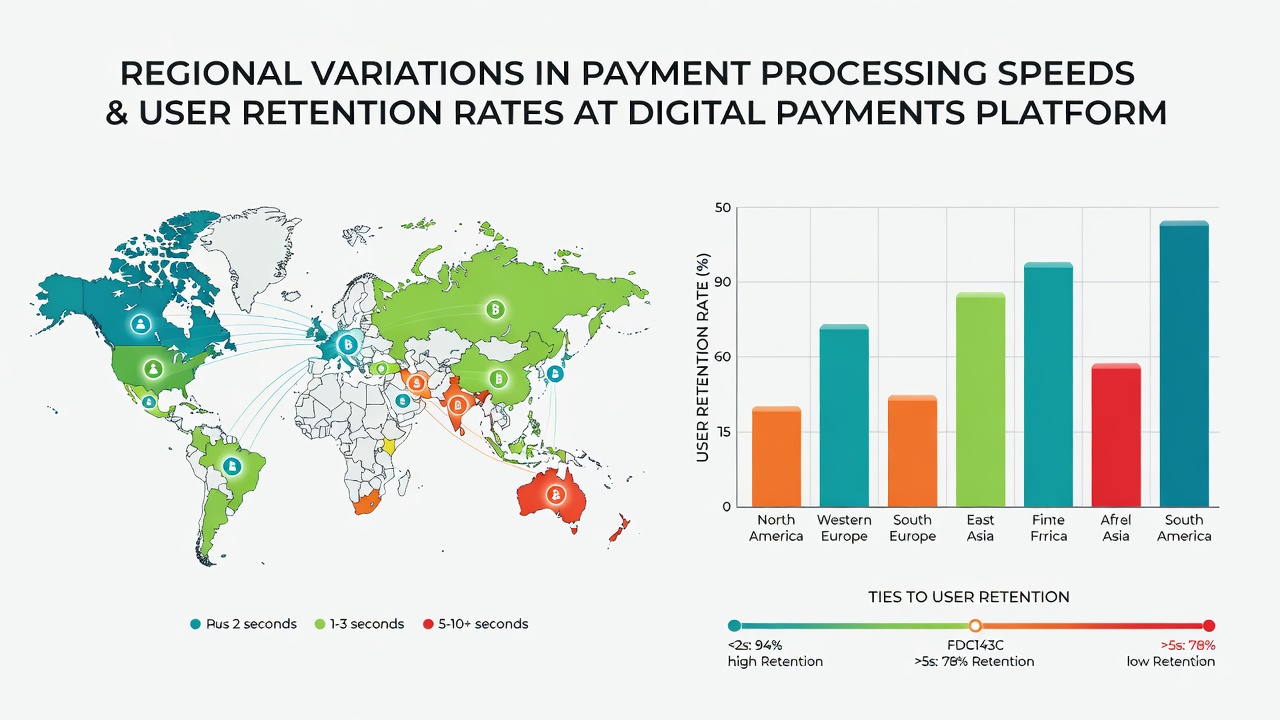
Markets in the Asia-Pacific region display a mixed picture. Singapore and Japan maintain strict licensing that routes most transactions through domestic banks with settlement times averaging 12 to 36 hours, and retention metrics sit near 67 percent at the half-year point. In contrast, several Southeast Asian operators licensed under looser frameworks have adopted cryptocurrency rails and local fintech partners that clear in minutes, lifting retention above 75 percent in the same period. Latin American platforms show parallel splits: Brazilian operators using PIX instant payments report 73 percent retention while those still dependent on traditional wire services record 61 percent. Researchers tracking these corridors emphasize that the relationship between speed and retention remains consistent even when average player spend and game selection are held constant.
Regulatory and Infrastructure Influences on Processing Windows
Payment speed differences trace back to both regulatory requirements and the maturity of local financial infrastructure. Jurisdictions that mandate manual identity verification for every withdrawal extend processing windows regardless of the underlying rail, whereas those permitting reusable verified wallets compress the timeline. A 2026 industry report compiled by the European Gaming and Betting Association documented that platforms operating under reusable-wallet rules cut average payout times by 41 percent compared with single-transaction verification models. Similar patterns appear in Australian data released by the Australian Communications and Media Authority, where operators integrating the New Payments Platform reduced clearance times from one day to under 15 minutes and recorded corresponding gains in repeat deposit activity. These infrastructure choices therefore function as structural drivers rather than optional features.
Cross-Regional Player Behavior Patterns
Behavioral logs reveal that players who experience faster payouts tend to maintain higher deposit frequency and lower churn rates across borders. When a North American user switches to a European-facing platform that offers instant settlement, session counts typically rise within the first month. Conversely, European users migrating to slower North American sites show measurable drops in activity volume. Platform analysts tracking these migrations note that the effect concentrates in the first 30 days after a payout delay, after which some users simply reduce overall engagement rather than close accounts outright. The pattern suggests that processing speed functions as a recurring friction point rather than a one-time deterrent.
Conclusion
Regional disparities in payment processing speeds map directly onto retention statistics at digital poker platforms, with faster clearing times consistently associated with longer player lifecycles. North American bank-rail delays contrast with European instant systems, while Asia-Pacific and Latin American markets split along similar infrastructure lines. Regulatory frameworks and local financial rails set the boundaries, yet the retention outcomes follow the same directional relationship wherever the data are measured. Platforms that align processing windows with the expectations set by the quickest markets record measurably higher six-month and twelve-month retention across every region examined.