Examining Links Between Public Health Campaign Timings and Enrollment Fluctuations in Self-Exclusion Programs Across State-Licensed Platforms
Written by Erik Krüger · Jul 27, 2026

Examining Links Between Public Health Campaign Timings and Enrollment Fluctuations in Self-Exclusion Programs Across State-Licensed Platforms
State-licensed gambling platforms maintain self-exclusion programs that allow individuals to restrict their access to betting accounts for set periods, and researchers have tracked how public health campaign schedules coincide with shifts in those enrollment numbers. Data from multiple jurisdictions indicate that campaign launches often align with measurable upticks in program participation, particularly when messaging emphasizes addiction risks and available support resources. Observers note that these patterns emerge across different regulatory environments where operators must report enrollment metrics to oversight bodies on a regular basis.
Structure of Self-Exclusion Programs in Regulated Markets
Self-exclusion systems require participants to submit requests through operator portals or state portals, after which accounts face temporary or permanent blocks that prevent deposits, wagers, and in some cases marketing contacts. Several states mandate minimum exclusion periods of one year, while others permit shorter or longer options depending on individual requests. Enrollment figures collected by regulatory agencies show steady baseline activity punctuated by periodic increases that correspond to external awareness efforts rather than changes in platform rules.
Timing Patterns in Public Health Initiatives
Public health agencies schedule campaigns around awareness months, legislative sessions, and major sporting events, releasing materials through television, digital ads, and community partnerships. When these efforts highlight gambling-related harms and direct viewers to exclusion tools, enrollment records from licensed operators frequently register higher submission rates within one to three weeks of peak campaign visibility. Studies from academic institutions have compared monthly data sets to identify these alignments, revealing stronger correlations in states where campaigns run for four to six consecutive weeks.
Observed Enrollment Fluctuations Across Jurisdictions
Figures from state regulatory reports demonstrate that enrollment numbers can rise between 15 and 40 percent during active campaign windows compared to preceding months without such messaging. One analysis covering multiple Atlantic and Midwestern states found that campaigns launched in late spring produced the largest relative increases, while winter campaigns yielded more modest gains. Platforms must log each request with timestamps, allowing analysts to map submission clusters directly against campaign calendars published by health departments.
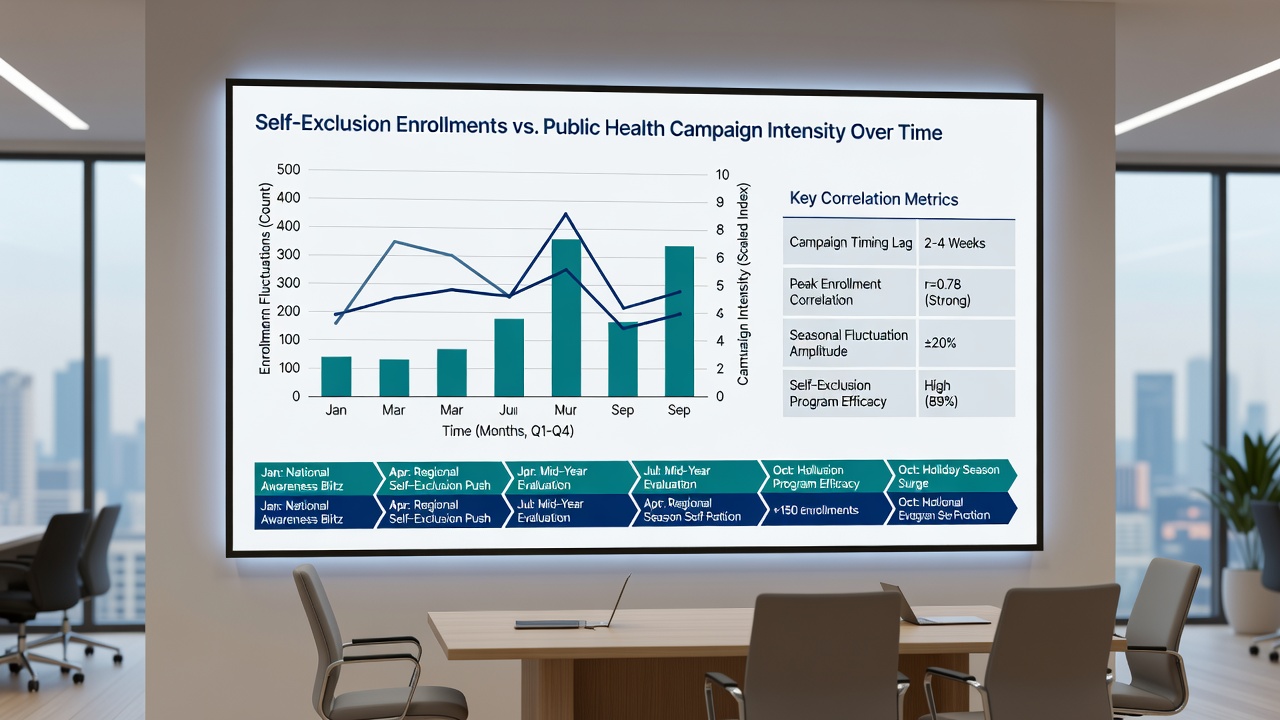
Researchers at several universities have examined whether demographic factors influence the strength of these timing effects, noting that younger adults appear more responsive to digital campaign components. Cross-platform data further indicate that operators with integrated exclusion request buttons on account dashboards record faster uptake once awareness materials reach targeted audiences.
July 2026 Campaign Developments and Data Trends
In July 2026 several states coordinated simultaneous public health efforts that referenced updated exclusion program features, including simplified online forms and expanded support hotline hours. Preliminary enrollment reports from that period show concentrated activity spikes in states that synchronized their messaging with national awareness weeks. Regulatory filings indicate that platforms processed higher volumes of requests during the final two weeks of the month, consistent with patterns observed in earlier synchronized campaigns.
Regulatory Reporting and Data Collection Methods
State agencies require licensed operators to submit aggregated enrollment statistics at monthly or quarterly intervals, creating standardized data sets that support timing comparisons. These submissions include breakdowns by exclusion duration and geographic region, enabling researchers to isolate campaign-related movements from other variables such as new game releases or bonus promotions. Independent reviews of these records have confirmed that fluctuations tied to public health messaging occur across both large and smaller market operators.
Conclusion
Available records establish clear temporal associations between public health campaign schedules and self-exclusion enrollment changes on state-licensed platforms, with consistent patterns appearing in multiple jurisdictions. Continued collection of timestamped enrollment data alongside campaign calendars allows ongoing examination of these relationships without reliance on individual operator policies. Additional studies from research institutions continue to refine understanding of how messaging duration and channel selection influence submission volumes across different regulatory frameworks.