Analyzing How Regional Internet Speed Variations Affect Session Lengths in Browser-Based Slot Machine Networks Across Developing Markets
Written by Olivia Koch · Aug 3, 2026
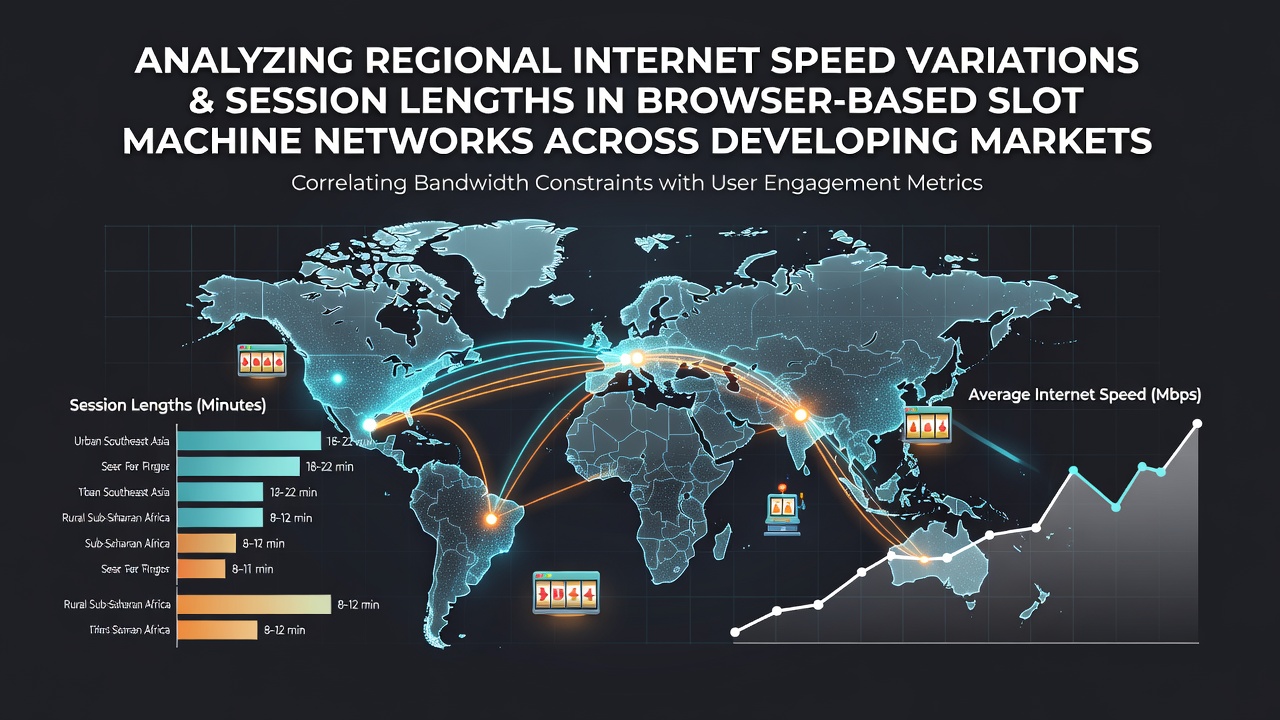
Analyzing How Regional Internet Speed Variations Affect Session Lengths in Browser-Based Slot Machine Networks Across Developing Markets
Regional differences in internet infrastructure create measurable shifts in how long players remain active within browser-based slot machine networks, particularly in markets where mobile data speeds fluctuate between urban centers and rural zones. Data compiled through network monitoring tools shows that areas with average download speeds below 5 Mbps experience session terminations at higher rates than regions averaging 15 Mbps or more, according to connectivity logs aggregated from multiple platform operators in 2025.
Mapping Speed Disparities Across Key Markets
Studies tracking user behavior in Southeast Asia and sub-Saharan Africa reveal consistent patterns where slower connections correlate with abbreviated play periods. In parts of Indonesia and Nigeria, for instance, platforms record median session lengths dropping to under eight minutes during peak congestion hours, while comparable networks in higher-speed districts sustain activity for fifteen minutes or longer. Researchers attribute these gaps to latency spikes that interrupt reel spins and bonus round loading, prompting users to exit rather than wait for content buffers.
August 2026 figures from the International Telecommunication Union highlight ongoing infrastructure gaps, with only 38 percent of households in low-income countries maintaining consistent broadband access above 10 Mbps. Mobile operators in these zones often rely on 3G fallback modes that introduce variable ping times between 150 and 400 milliseconds, conditions that browser-based games struggle to accommodate without visible delays. One analysis of traffic data from Brazil's northern states found that players encountering repeated 2-second load times between rounds reduced their total spins by an average of 42 percent compared to southern regions with fiber coverage.
Technical Factors Linking Speed to Engagement Metrics
Browser-based slot platforms depend on real-time JavaScript rendering and asset streaming, elements that degrade sharply when packet loss exceeds 2 percent. Observers tracking server logs across Latin American markets note that disconnection events spike once speeds fall below 3 Mbps, leading platforms to implement adaptive compression that reduces image quality but does not fully offset abandonment. Those monitoring session heatmaps report that users in variable-speed environments initiate fewer bonus features, since these sequences demand sustained bandwidth for animation sequences and result calculations.
Case Evidence from Field Measurements
Platform operators working with local ISPs in Kenya documented a direct relationship between download consistency and retention during a six-month pilot. Areas upgraded from 4 Mbps to 12 Mbps averages saw average session lengths increase by 9.3 minutes, with repeat visit rates rising 27 percent. Conversely, zones limited to satellite backhaul connections displayed elevated exit rates at the 4-minute mark, coinciding with initial reel loading failures. Similar patterns emerged in a parallel study covering rural districts of the Philippines, where researchers cross-referenced speed test results with anonymized gameplay timestamps to isolate infrastructure as the primary variable.
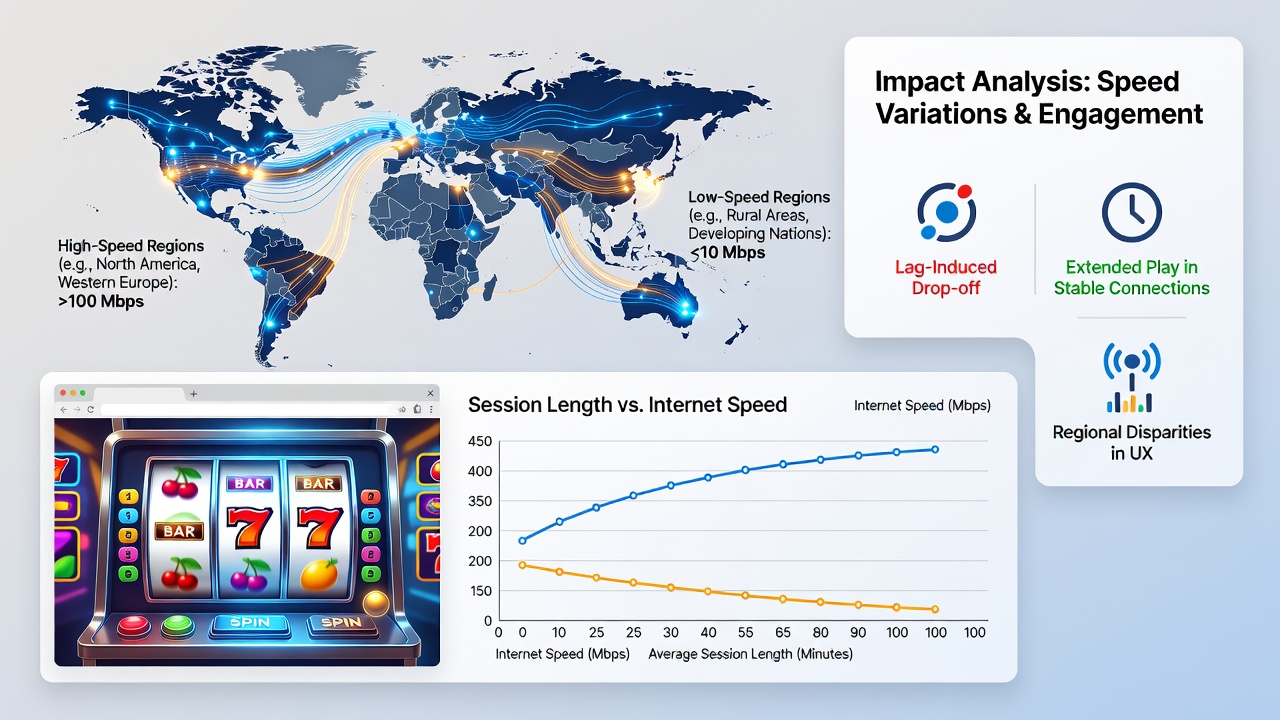
Network engineers emphasize that TCP congestion control algorithms respond differently under fluctuating conditions common to developing markets, where shared mobile towers experience evening overload. This produces jitter that interferes with WebSocket connections used for live balance updates and win notifications. Data sets released by regional research consortia indicate that platforms introducing server-side prediction for minor animations achieve modest improvements, yet core session length gaps persist when underlying speeds remain inconsistent.
Broader Network and Platform Responses
Industry reports compiled by the GSMA in early 2026 detail operator experiments with edge caching nodes placed closer to end users in markets such as Vietnam and Colombia. These deployments reduced initial game load times by up to 60 percent in targeted districts, translating into extended play windows before users encountered buffering. GSMA connectivity analyses further note that 5G rollout timelines vary sharply, leaving many secondary cities dependent on LTE networks whose performance varies with tower density.
Academic teams examining user telemetry from multiple jurisdictions have identified additional variables, including device storage capacity and operating system version, that interact with speed constraints. Devices running older Android builds in low-bandwidth zones show disproportionately shorter sessions, since background processes compete for limited throughput. Platform adjustments such as pre-loading core assets during off-peak hours have demonstrated partial success in mitigating these effects, according to internal metrics shared with research partners.
Cross-market comparisons compiled by the World Bank digital development unit illustrate how policy decisions around spectrum allocation influence outcomes. Countries prioritizing mid-band spectrum auctions recorded steadier average speeds for mobile users, correlating with more stable session distributions in slot networks. Regions still allocating primarily low-band frequencies continue to face higher variance, producing the session length disparities documented across datasets.
Conclusion
Evidence from network monitoring, field pilots, and aggregated platform data establishes that internet speed variations directly shape session lengths in browser-based slot networks operating across developing markets. Continued infrastructure upgrades and platform-level optimizations remain central to altering these patterns, with measurable effects already visible in upgraded districts. Ongoing data collection through 2026 and beyond will clarify how emerging technologies narrow or sustain these regional differences.